Cell Connectors
Molex
“Molex” cells use a 3 pin KK254 connector from Molex, which shares the same 2.54mm pitch as other generic pin headers used in a hobby electronics context. This makes parts and termination equipment cheap and easy to access.
Generic versions come with nickle and tin platings, but in most diving applications there is large amounts of condensing humidity, so gold is worthwhile.
Its also important to ensure that you’re getting the right locking tab design for the connectors, as they come in a friction fit lock which is not nearly as effective at holding parts together.
The molex PNs that I tend to use are:
Crimp: 0008560110
Housing: 0022013037
Pin Connector: 0022292031
The pinout is as follows: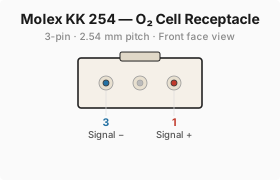
Handset Connectors
Fischer Ports
Fischer ports have been the de-facto standard for connecting analog rebreather signals to dive computers for almost as long as there has been the need to do so. The plug is specifically the 7 pin 103 Series by Fischer Connectors, and they have developed a somewhat mixed reputation within the diving community. Whether or not the reputation is deserved is a matter of ongoing debate, but a significant contributor to the negative perception is the o-ring placement. It is placed within the female (computer) side of the connection and is inaccessible to the end user; maintenance of this o-ring is therefore limited to occasional lubrication with mineral oil.
Another often overlooked fact is that there is no defined standard for how a Fischer port should be wired up. By convention many computers use the same format as Shearwater which uses pin 1 as ground, then pins 2–4 for cells 1–3 respectively. Pins on a fischer port are numbered counter-clockwise looking at the computer end of the connection.
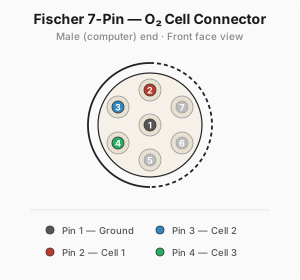
It is important to note that this convention is far from universal, and assuming it is can result in disastrous consequences. For example the VRX computer only has one cell which should be connected on Pin 3, so at first glance would appear to be compatible. However this computer also charges via the Fischer port using Pin 2 as ground and Pin 4 at 6.2 volts. This voltage is still present on the pins from the battery when the computer is plugged into a rebreather, so if the rebreather is wired for Shearwater-compatible electronics, this voltage can potentially be placed across cells 1 and 3, damaging them and potentially any other controllers connected to the rebreather at the time.
One might also notice that the typical 3 cell arrangement does not use all of the pins of the Fischer connector, and there are a number of non-standard uses of these pins depending on the manufacturer. A notable example is the AV1 dive computer by AV-UWT, which uses pins 6 and 7 to drive warning LEDs in their HUD unit. Non-standard usages such as this can be problematic, particularly if used for sending signals out from the controller. This is because if there has been any water ingress into the port, the external signals can influence the very low level analog signals coming into the controller and result in erroneous readings.
The lesson from this is that when working with fischer ports, assume nothing and check everything; failure to do so could result in hard-to-diagnose intermittent issues, or the outright destruction of rather expensive hardware.